

The Future of Financial Crime Prevention: Interview with CEO Ari Tuchman
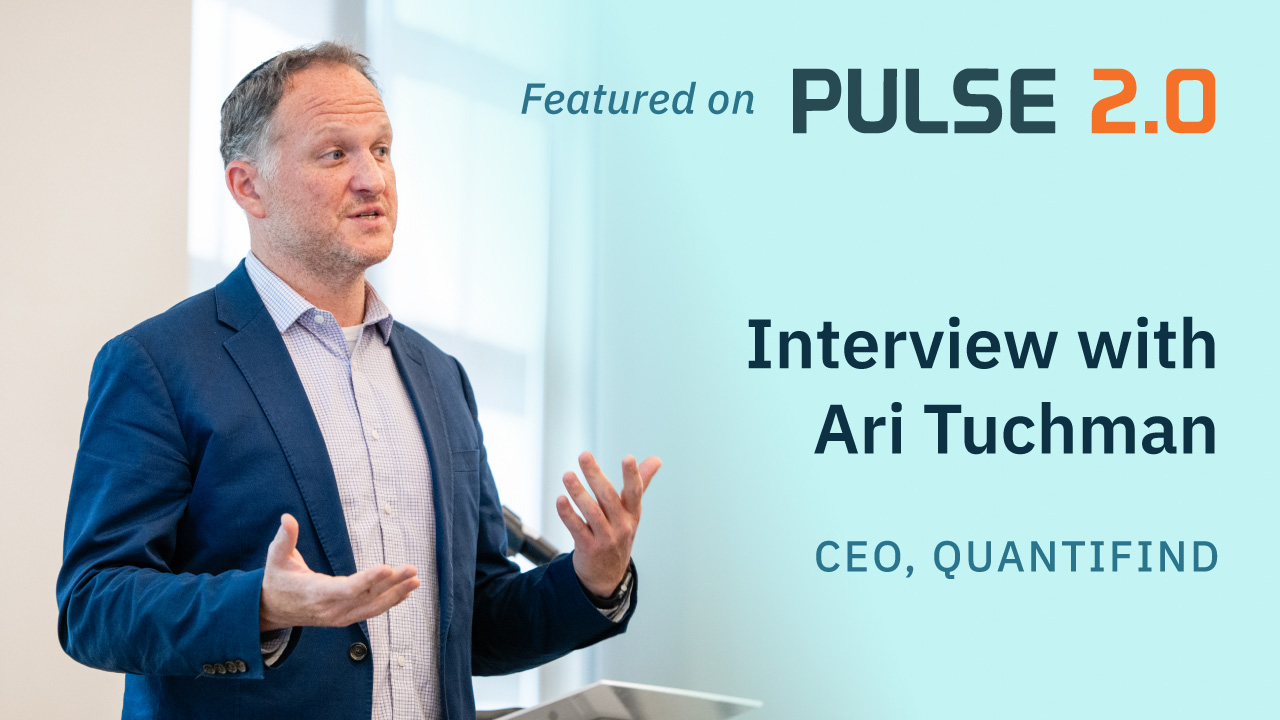
In a recent Pulse 2.0 interview, Quantifind Founder and CEO Ari Tuchman explores why the future of financial crime prevention depends on precise identity resolution, connected risk intelligence, and responsible agentic AI—and why better intelligence matters more than bigger AI models.
Financial crime is becoming increasingly sophisticated, interconnected, and difficult to detect. Criminal networks exploit fragmented information, complex ownership structures, and limitations in conventional screening systems to conceal their activities. Meanwhile, financial institutions and government agencies face growing pressure to improve detection accuracy, reduce operational burdens, and adopt AI responsibly.
In a November 17, 2026, interview with Amit Chowdhry of Pulse 2.0, Quantifind Founder and CEO Ari Tuchman discussed how advances in AI-powered risk intelligence are changing the way organizations identify threats, investigate complex networks, and make consequential risk decisions.
Drawing on his background in experimental physics, Tuchman explained how the principles of precision measurement and signal extraction informed Quantifind's approach to solving some of the world's most complex financial crime and national security challenges.
The conversation explored five fundamental shifts shaping the future of risk intelligence.
Effective Financial Crime Detection Requires Understanding Networks, Not Just Names
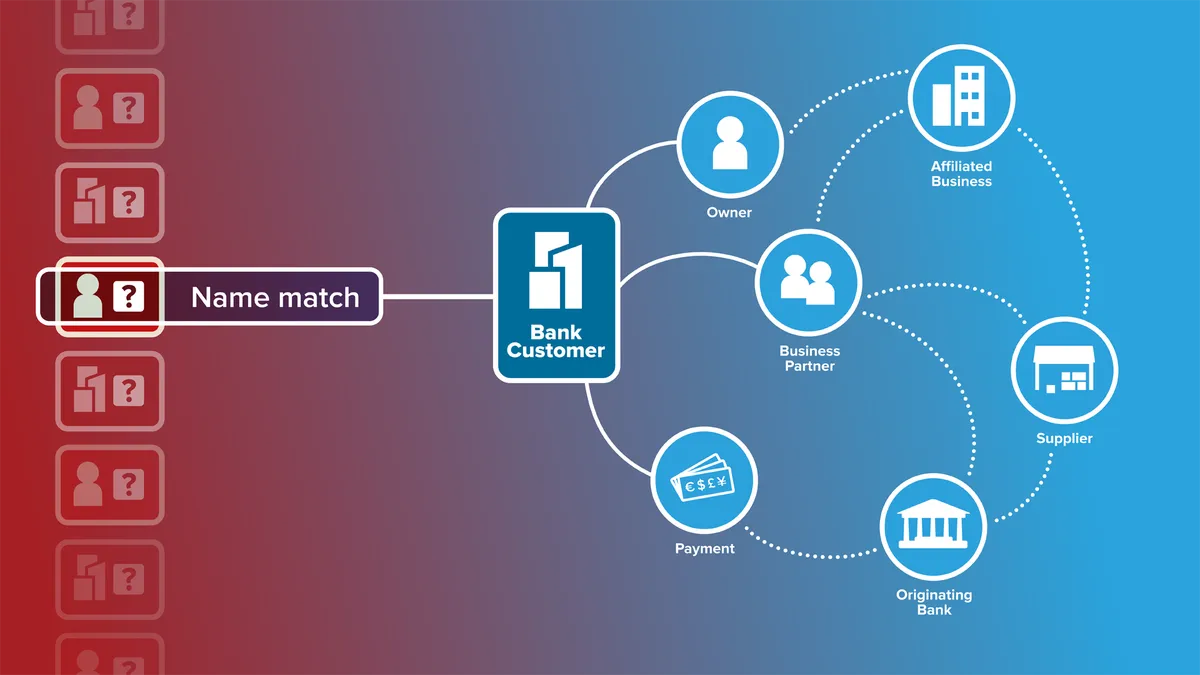
Traditional sanctions screening has largely focused on matching individuals and organizations against known watchlists. But sophisticated actors rarely operate through straightforward, identifiable relationships.
Instead, they exploit shell companies, intermediaries, family members, corporate ownership changes, and identity variations to distance themselves from sanctioned entities or illicit activities.
As Tuchman explained in Pulse 2.0, understanding risk requires more than determining whether a name appears on a sanctions list. Organizations must establish who an entity actually is, who owns or controls it, and how its relationships evolve.
This shift has significant implications beyond sanctions compliance. In third-party risk management, for example, material exposure may reside several relationships away from the company being evaluated—in a supplier, subsidiary, executive, or foreign affiliate.
The challenge is not simply collecting more records. It is connecting information across multiple sources to reveal meaningful relationships and distinguish genuine threats from incidental associations.
The implication: Financial institutions and government agencies need risk intelligence capable of examining entire networks, rather than evaluating individuals and organizations in isolation.
Better Entity Resolution Improves Both Detection Accuracy and Operational Efficiency
Financial crime teams face a persistent dilemma: conventional screening systems generate overwhelming numbers of false positives while sophisticated threats can remain undetected.
These challenges share a common root cause: inadequate identity resolution.
Similar names do not necessarily identify the same individual, while vastly different names, aliases, and transliterations can refer to the same person or organization.
Tuchman emphasized that reliable identity resolution must incorporate contextual evidence, including geography, chronology, ownership, associates, and corporate records.
This approach reflects the scientific principles behind Quantifind's founding. In precision measurement, the objective is to distinguish meaningful signals from surrounding noise, measure uncertainty, and determine what additional evidence can strengthen a conclusion.
Applied to financial crime prevention, this means producing more discriminating risk assessments—reducing unnecessary investigations without weakening controls.
The implication: Screening effectiveness should not be measured by the number of alerts generated, but by the ability to identify meaningful risk accurately and efficiently.
Responsible Agentic AI Must Combine Automation With Governance and Human Judgment
Agentic AI promises to fundamentally change financial crime operations by automating complex, evidence-intensive activities that traditionally require significant analyst time.
AI agents can gather information, reconcile identities, investigate relationships, evaluate evidence, and prepare case narratives. But in highly regulated environments, automation must operate within clearly defined boundaries.
In the Pulse 2.0 interview, Tuchman stressed that responsible AI agents require explicit permissions, trusted information sources, transparent reasoning, documented actions, and escalation mechanisms.
Their conclusions must be supported by evidence that investigators, auditors, and regulators can examine.
Equally important is determining where human oversight remains essential. Decisions involving legal, regulatory, financial, or national security consequences often require professional judgment, particularly when evidence is conflicting or policies demand discretion.
Through Agentic Middleware and Agentic Execution, Quantifind is advancing the integration of trusted risk intelligence into enterprise systems, analyst workflows, and AI agents. These capabilities enable organizations to automate defined portions of risk enrichment, investigation, triage, and case resolution while preserving governance and accountability.
The implication: The objective is not to eliminate human decision-making. It is to automate work that machines can perform reliably at scale while giving experts stronger evidence for consequential decisions.
The Quality of Risk Intelligence Matters More Than the Size of an AI Model
As organizations invest heavily in generative AI and increasingly powerful models, Tuchman highlighted a critical distinction between AI capability and the quality of intelligence supporting it.
A general-purpose AI model can reason across information, but its effectiveness in regulated risk environments depends on the reliability and relevance of the underlying evidence.
Accurate identity resolution, domain-specific context, source provenance, and explainable findings are essential to producing trustworthy results.
A larger model cannot compensate for fragmented, inaccurate, or poorly connected information.
This is the philosophy behind Graphyte, Quantifind's AI Risk Intelligence platform, which combines purpose-built AI, entity resolution, and billions of data points across news, corporate registries, sanctions lists, court records, and other sources.
By connecting disparate information and identifying meaningful relationships, Graphyte supports investigations and risk decisions grounded in traceable evidence.
The implication: The competitive advantage in AI-powered risk management will increasingly come from combining capable AI models with high-quality, purpose-built risk intelligence—not model size alone.
Explore the Graphyte AI Risk Intelligence Platform
The Next Era of Risk Operations Will Be Defined by a New Operating Model
Perhaps the most consequential theme of the interview was Tuchman's vision for how risk operations will evolve over the next three to five years.
Today, analysts routinely move across disconnected systems, search multiple data sources, reconcile entity information, and manually assemble evidence before making decisions.
Simply introducing an AI interface into these workflows may improve individual tasks, but it does not fundamentally address the underlying operational inefficiencies.
Tuchman anticipates a different model: risk intelligence continuously assembled around individuals, organizations, and networks, with governed AI agents performing substantial portions of evidence collection, investigation, monitoring, and case preparation.
Human experts will increasingly focus on exceptions, complex judgments, and decisions where accountability and experience are indispensable.
Successful implementation will depend on clear objectives, measurable accuracy, interoperability, high-quality intelligence, and transparent governance.
The implication: Organizations that treat AI as an opportunity to redesign risk operations—not simply introduce another technology feature—will be better positioned to improve detection effectiveness, scale operations, and strengthen decision-making.
Advancing AI Risk Intelligence at Global Scale
The interview also highlighted Quantifind's continued growth and commitment to advancing financial crime prevention and national security capabilities.
Trusted by 10 of the top 20 global financial institutions, Quantifind helps organizations move beyond fragmented data and isolated alerts to connected, evidence-backed risk intelligence.
Following a $200 million investment led by Summit Partners, the company is expanding its international presence across Europe, Asia-Pacific, and the Americas while advancing its AI Risk Intelligence capabilities.
For Tuchman, the opportunity extends beyond incremental improvements in compliance technology. It is about transforming how organizations understand risk, connect intelligence, and take action with confidence.
The future of financial crime prevention will not be defined by how much information organizations can collect or how many alerts they can process. It will be defined by how accurately they connect information, distinguish meaningful signals, and translate intelligence into defensible decisions.
Read the Full Interview
Explore Ari Tuchman's perspectives on AI-powered risk intelligence, evolving sanctions threats, identity resolution, responsible agentic AI, and Quantifind's vision for the future.
Read the full interview with Ari Tuchman on Pulse 2.0
Source attribution: This article summarizes insights shared by Quantifind Founder and CEO Ari Tuchman in an interview conducted by Amit Chowdhry, published by Pulse 2.0 on November 17, 2026. The discussion and viewpoints attributed to Tuchman are based on the original interview. Section implications are Quantifind's editorial synthesis of those insights.
Frequently Asked Questions
The questions everyone asks first.
Do you publish pricing?
Every configuration is scoped to your users, volumes, and workflows, so a published rate card wouldn’t tell you much. Connect with us via the Plans & Packaging page and complete the form to get a real number quickly.
Build the case. No forms in the way.

Find the Risk Before It Reaches a Watchlist
Quantifind and FinScan are bringing AI-powered adverse media intelligence directly into AML screening workflows—helping compliance teams uncover hidden risk faster, reduce investigative noise, and make more confident decisions.

Run Graphyte on your data
Benchmark it against your current system. See the false positives eliminated, hidden risk uncovered, and investigation time saved.