Economic Defense Software
Sometimes you need to know your neighbor.
Land near critical infrastructure, vital resources, and sensitive sites carries risk when nobody can say for certain who owns it. Reports of foreign and adversarial ownership tied to strategic real estate have become common in the news, hidden behind LLCs, shell companies, and layers of ownership that take months to unwind — if anyone unwinds them at all. The scale of the problem is still coming into focus, and so are the consequences.
Organizations on the leading edge of this problem trust Quantifind to trace ownership back to its true source, flagging foreign ties and adversarial capital before it becomes a headline.
200+
global public & commercial data sources
>$16M
federal R&D investment received between 2020 - 2026
95%+
reduction in false positives
100%
auditable, explainable decisions


the problem
Manual review was built for a slower world.
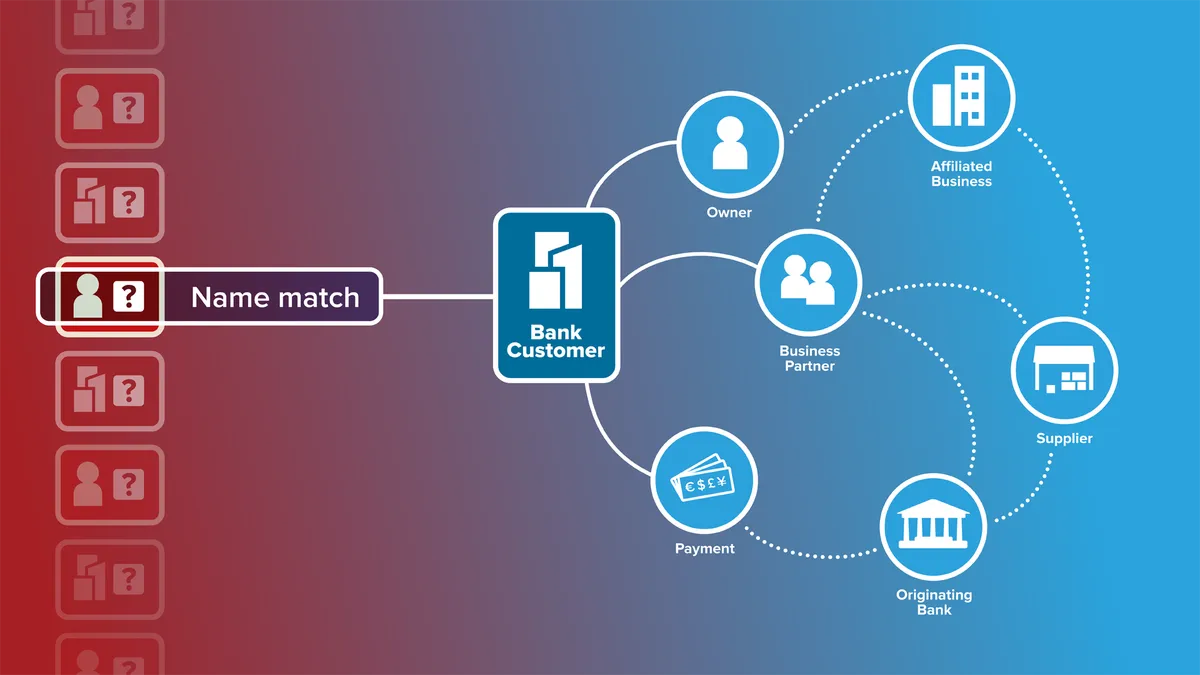
Risk doesn't live in a single name; it hides in networks, aliases, shell companies, and subsidiaries designed to blend in. And a risk profile isn't static. It evolves as owners, investors, and relationships change. One-time screenings and shortlist sampling won't catch that. You have to watch everything.
the fix
Automated network mapping with Quantifind enables small teams to trace hidden ownership and influence in minutes, not days.
The Capability Stack
Six capabilities. One workflow.
Each capability is a section of this page — not a separate product to buy.
Entity Screening
Vendor and subcontractor screening with Name Science™ entity resolution at 95%+ accuracy, run across a full population in batch or in real time for a single award.
Beneficial Ownership & FOCI Risk
Automated network expansion maps ownership, investment, and subcontractor relationships through multiple degrees of separation, surfacing foreign ownership, control, or influence hidden behind shell companies and layers of subcontracting.
Adverse Media & Sanctions Screening
Risk extracted from a deep archive of global news and sanctions lists using dynamic risk typologies, not keyword hits, distinguishing a vendor's principal from an unrelated namesake or a passing mention.
Corporate & Trade Risk
Corporate registries across 130+ jurisdictions and global trade data expose ownership structures and trade-based risk behind a supplier.
Population-Scale Batch Screening
Screen an entire vendor registry, award file, or grantee list at once instead of one record at a time, giving small teams full population coverage during onboarding, recompete, and periodic re-review.
Audit-Ready Case Documentation
Every risk determination carries source evidence, confidence scoring, and a full chain of custody, ready for the acquisition record or an oversight review.
How it works
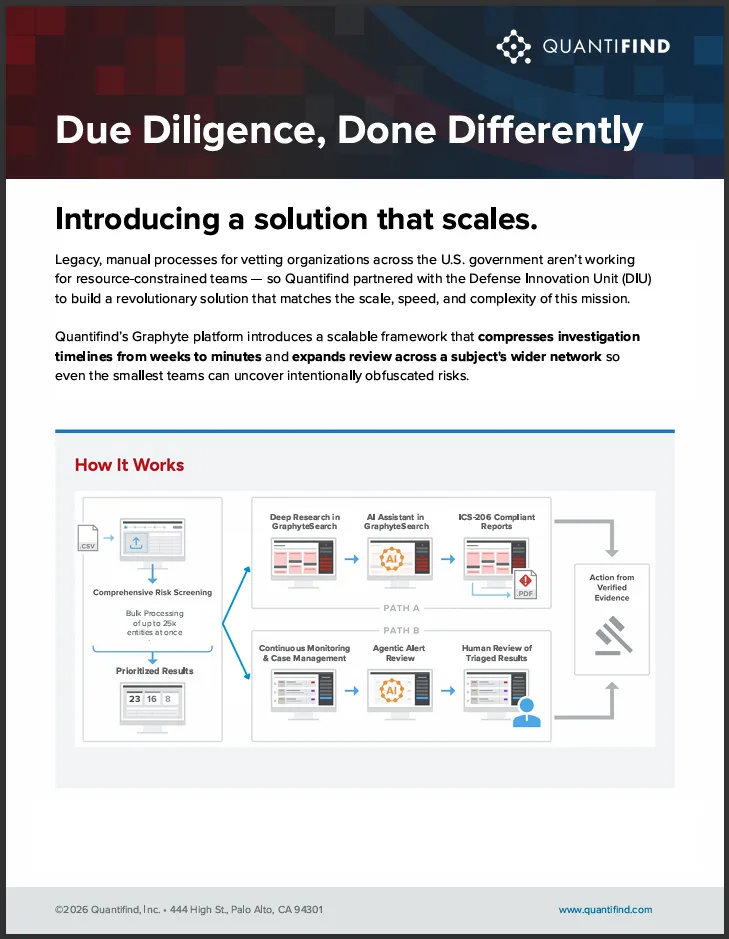
Go from a name to intelligence you can act on.
Start with any entity
Initiate your search with as little as an individual name, organization, address, handle, email, or phone number. Search a single name, a vendor list, award file, or a public-database.
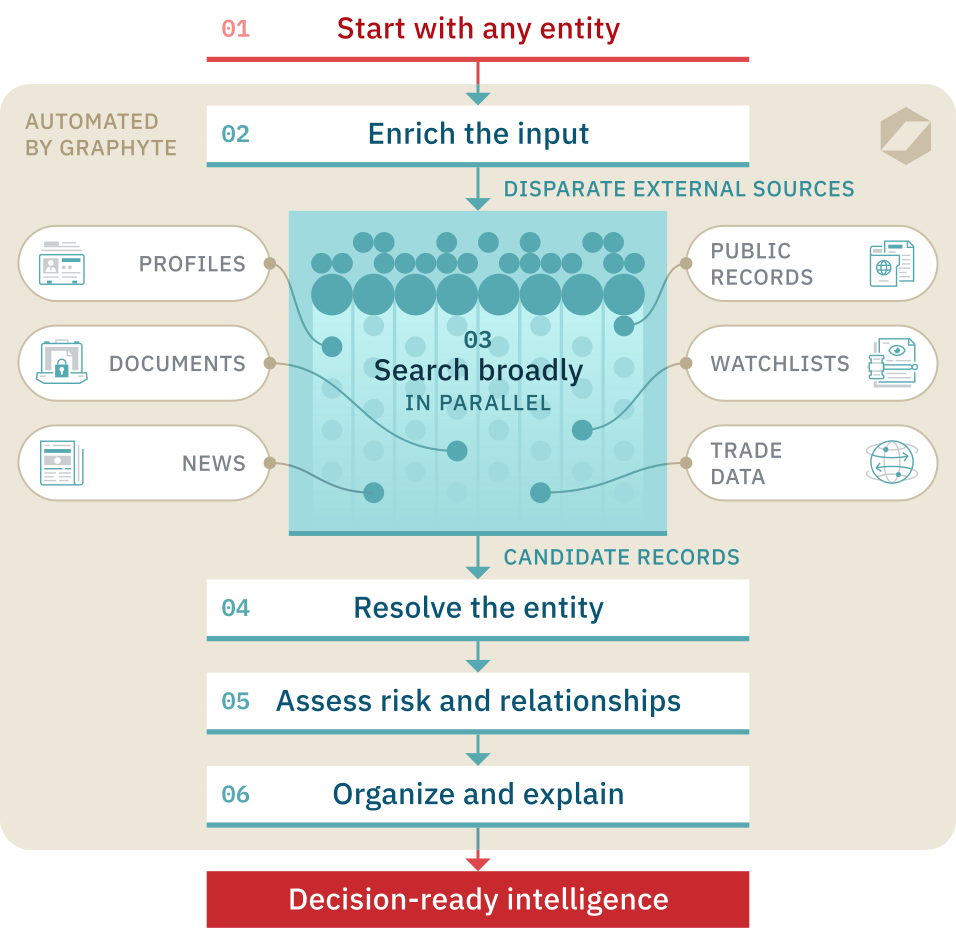
Contextualize and search
Graphyte standardizes the name and location, flags potential data quality issues, and adds linguistic context, expected name variations, and geographic precision, then scans 200+ global structured and unstructured data sources.
Resolve and infer
Name Science™ and proprietary agentic middleware distinguish true matches among messy, multilingual data, then assembles a unified, confidence-scored profile by risk typologies, relationships, and relevance.
Assess and decide
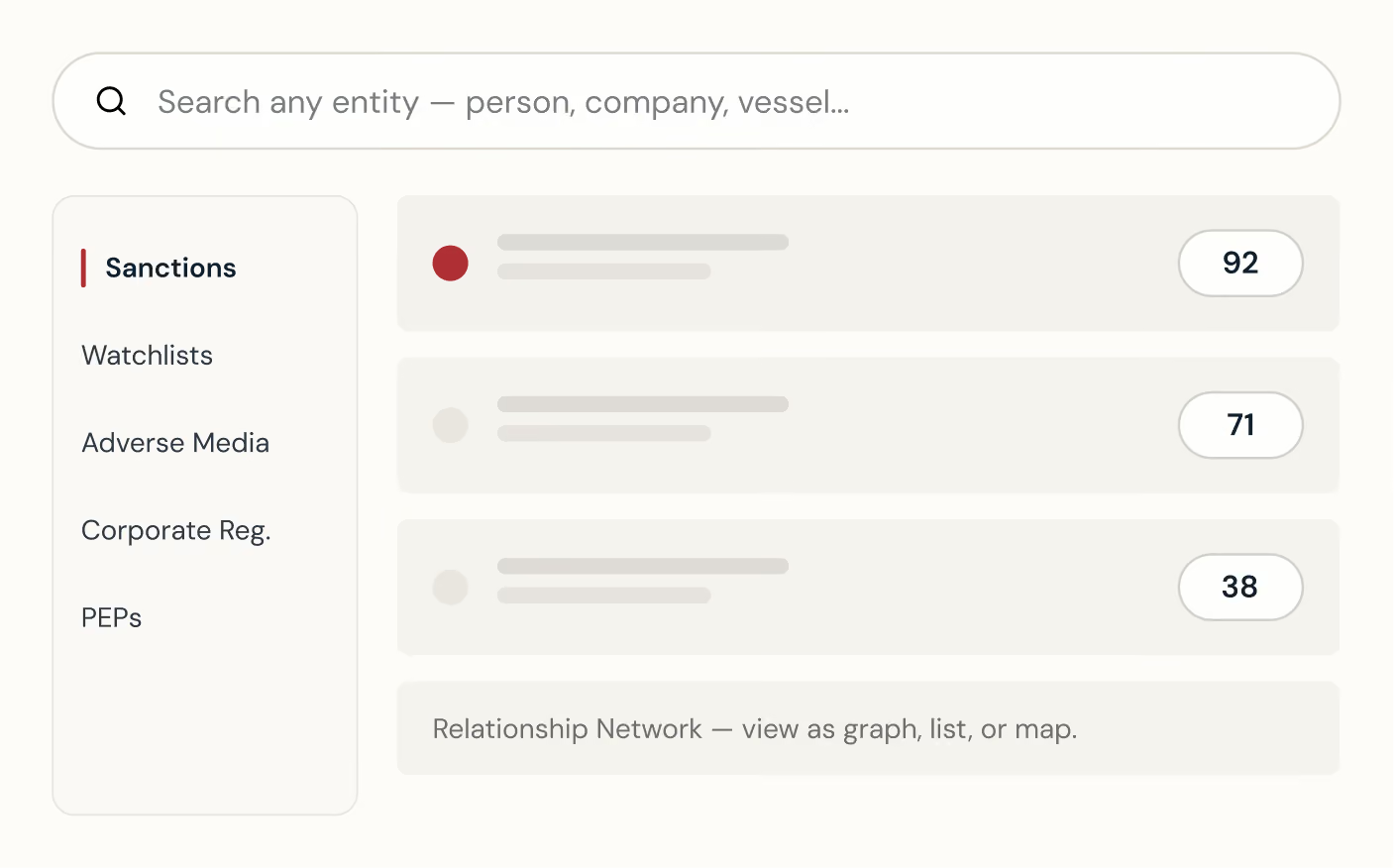
Graphyte aggregates and summarizes the results, organizing findings by risk and confidence with supporting context, source evidence, and provenance. All that's left is deciding what risk you accept, what warrants a closer look, and what happens next.
Continuous Monitoring
Continuous monitoring re-screens a fixed population against new data as it is ingested, replacing one-time checks or periodic re-screening. New risk signals, from a sanctions listing to a change in ownership, surface as they emerge, so you’re never the last to know.
Frequently Asked Questions
KYC software, answered.
What is economic defense and resource security software?
Economic defense and resource security software identifies foreign ownership, control, or influence behind land, supply chains, and critical resources, surfacing risks that self-reported filings and manual review typically miss. Quantifind's Graphyte platform traces a buyer or investor back to its true owner, and flags foreign ties and adversarial capital to support both FOCI mitigation investigations and CFIUS reviews.
Why isn’t AFIDA reporting enough to track foreign land ownership?
Filings under the Agricultural Foreign Investment Disclosure Act are self-reported and released only once a year, so a purchase can go undetected long after the deal has closed. Quantifind supports real time on-demand screening, rather than waiting for an annual disclosure cycle, and resolves the LLCs and shell companies AFIDA filings often leave unexamined.
How does Quantifind identify risk in land and property ownership?
On its own, Quantifind is an investigative tool: an analyst searches a specific property owner, LLC, or transaction, and Graphyte helps reveal ultimate beneficial ownership and other key relationships, flagging foreign ties or adversarial capital. Paired with a partner platform that ingests property records automatically, Quantifind can also power continuous monitoring, flagging new transactions within a defined radius of a base, reservoir, or other sensitive site as they happen, rather than requiring someone to search for them.
Does Quantifind support FOCI mitigation and CFIUS reviews?
Yes. Graphyte's ownership-tracing and network-mapping capabilities are used in both FOCI mitigation investigations, which assess foreign ownership, control, or influence over defense-adjacent vendors, and CFIUS reviews, which evaluate the national security risk of foreign investment in U.S. businesses. The same technology applies whether the question involves a supplier, a real estate transaction, or a corporate acquisition.
What data sources does Quantifind screen for economic defense and resource security?
Graphyte draws on 200+ structured and unstructured data sources, including corporate registries, property records, global sanctions lists, and adverse media across multiple languages. That breadth is what makes it possible to trace ownership through shell companies and cross-border structures that a single-source check, or an annual disclosure filing, would never surface.