How Quantifind’s Megaspeed investigation illustrates the importance of historical ownership, connected intelligence and evidence-led risk decisions.
A Singapore-based company at the center of reporting on Nvidia semiconductor exports offers an important lesson for the institutions responsible for protecting advanced technology: a company’s current name and shareholders may reveal only part of its risk profile. Quantifind’s investigation into Megaspeed International traced its corporate history through Hong Kong, offshore holding companies and a former parent with indirect minority Chinese government investment. The analysis also identified a significant historical transaction involving a company listed as owned by former Megaspeed executive Alice Huang (Huang Le).
Quantifind shared its findings and methodology with TIME investigative journalist Dr. Manisha Ganguly. The research demonstrates how AI-powered network intelligence can help investigators uncover relationships that warrant scrutiny, even when a direct watchlist search offers little context.
Reconstructing the corporate history
Corporate intelligence records identify Megaspeed’s former name as 7Road International Pte Ltd and trace its historical ownership to 7Road Holdings through 7Road International HK. Published reporting describes the transfer of the Singapore business to a British Virgin Islands company named Huang Le Ltd in March 2023, followed by its renaming as Megaspeed and subsequent transfer to Swiftdata in November. Huang served as director and managing director during that transition, according to reporting. The records reviewed do not establish that she owned Huang Le Ltd.
Tracing capital through multiple corporate layers
Quantifind identified a layered investment path into 7Road Holdings. Its corporate intelligence records show a 10% State Council interest in Shanghai Baohu Investment Management Center, which wholly owns Baohu Holdings, a company recorded as holding 12.81% of 7Road. Other Chinese government-linked investors are also identified in Shanghai Baohu. This is evidence of indirect minority state-linked investment in Megaspeed’s former corporate parent, not evidence of current Chinese government ownership or control of Megaspeed.
Connecting relationships that predate Megaspeed
Corporate intelligence records also describe a 2019 transaction in which Maple Vale Ltd, listed as solely owned by Huang Le, sold Osmanthus Vale Holdings to 7Road for RMB 1 billion in cash. The transaction predates Megaspeed’s 2023 ownership transition by four years. Additional records identify related companies within 7Road’s structure, including Hawthorn Vale, which shares a registered address with the former Hong Kong parent of Megaspeed. Reporting identifies financier Kang Wei as a Hawthorn Vale director; that role requires primary-source confirmation. A shared address alone does not establish coordination or common control.
What AI risk intelligence makes possible
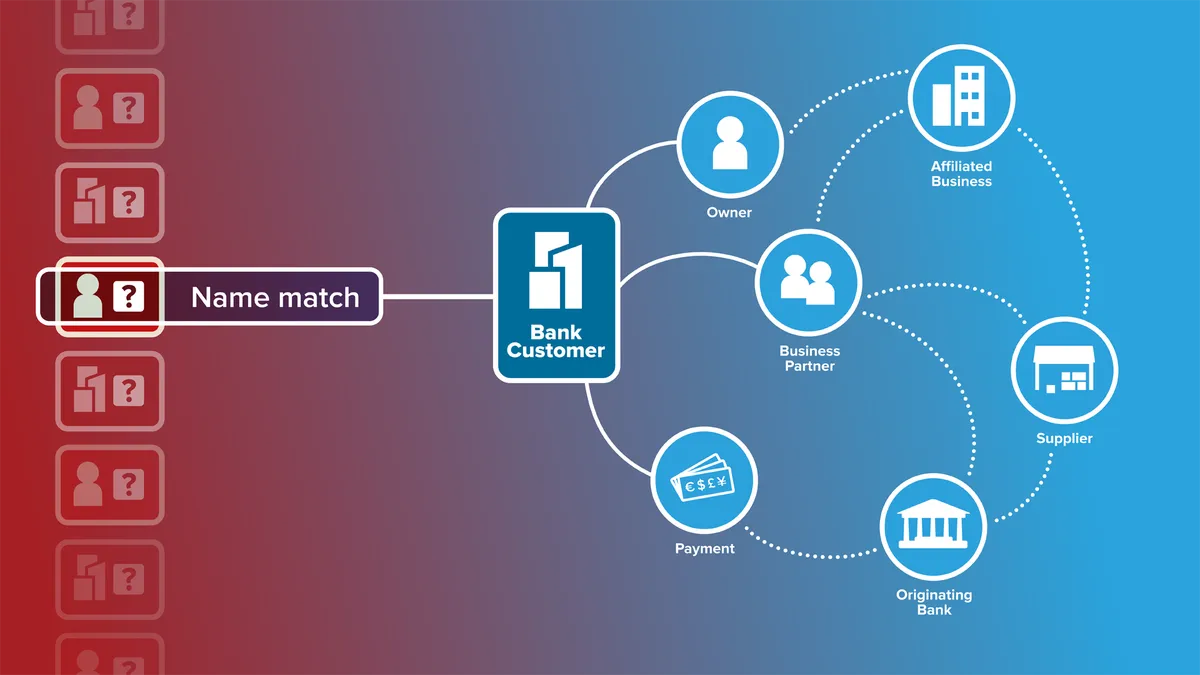
Using Graphyte™, Quantifind’s AI Risk Intelligence platform, a researcher started with Megaspeed and followed historical names, ownership relationships, directors, transactions and counterparties across jurisdictions. The briefing describes eight investigative leads traceable within four relationship hops. Purpose-built AI models, Name Science and Entity Resolution connected fragmented records into source-linked evidence paths, while the researcher evaluated the reliability of each relationship and identified gaps requiring verification.
This is not a generative AI system drawing conclusions about wrongdoing. It is an evidence-led investigative process that makes relevant relationships discoverable and gives analysts the context to decide whether additional diligence is warranted.
Implications for financial crime and national security leaders
Banks, technology suppliers and government agencies can use connected intelligence earlier in their workflows, from onboarding and third-party screening to export-control diligence and complex investigations. The objective is to identify material relationships before making consequential decisions, not to treat every connection as a risk finding. In the Megaspeed case, the evidence supports Enhanced Due Diligence; it does not establish unlawful chip diversion, sanctions evasion, espionage, government direction or misconduct by any identified party.
“Megaspeed’s historical ownership connections to Chinese entities, the involvement of offshore holding companies, and the subsequent changes in its corporate structure raise legitimate questions about the extent of its independence,” says Graham Bailey, who spent over a decade in financial crimes analytics and compliance at Wells Fargo, and is chief operating officer at Quantifind. “These connections do not, by themselves, establish wrongdoing or continued control. But they underscore why examining ownership records alone is insufficient.”
Explore how Quantifind helps financial institutions and government agencies detect risk across complex networks. Request a demo.
Source note: Quantifind, Response to TIME on the Megaspeed Investigation, November 16, 2026, sections 1–4 and appendix (A1–A7, C1–C3, D1–D4 and 6B). Findings distinguish corporate intelligence records from secondary reporting and unresolved leads.