Name Science · Graphyte Technology
The intelligence within every name.
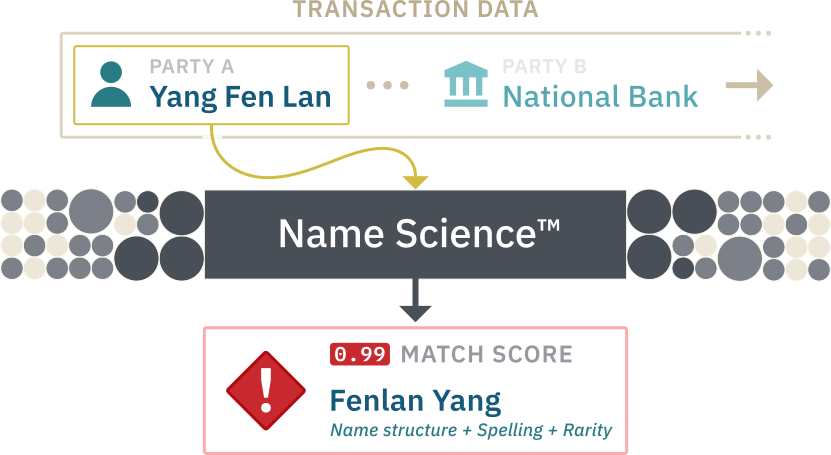
Quantifind’s Name Science models the cultural, linguistic and statistical signals within names to surface likely matches across languages and scripts while reducing false positives driven by superficial string similarity. Purpose-built AI models deliver this intelligence at the speed and scale that screening demands.
10M+
name-alias pairs used in training
200+
Countries with independently modeled name conventions
12
custom name transliteration &translation models
<5ms
to enrich a name with contextual features


the problem
A name is more than a string of characters.
Comparing two names as character strings ignores the cultural, linguistic, and statistical context they encode. Systems that rely on string similarity overvalue coincidental resemblance and can miss predictable name variations.
the fix
Model the context within names—cultural conventions, expected variants, and rarity—to surface likely matches and filter out noise.
the building blocks
Inside Name Science
Purpose-built models uncover the context within person and organization names and combine it to assess name-match probability.
Name Standardization & Parsing
Normalize honorifics and affixes; parse personal names into given and family names using cultural conventions.
Cultural & Linguistic Context
Infer likely ethno-linguistic origins for personal names and identify geographic cues in organization names.
Expected Name Variants
Predict likely nicknames, abbreviations, token changes, and spelling variations—and assign probabilities to those variants.
Name Translation & Transliteration
Model names across scripts, accounting for historical standards, cultural conventions, and organizations’ chosen translated names.
Name Rarity & Distinctiveness
Estimate name frequency and distinguish informative organization-name tokens from generic terms to put similarity in context.
Name-Match Probability
Combine 50+ features, including string distance, sound, and modeled name context, to assess the probability of a name match.
How it works
From a raw string to a confident match.
01 · Identify the name’s context
Predict person or organization, then infer likely ethno-linguistic context or geographic
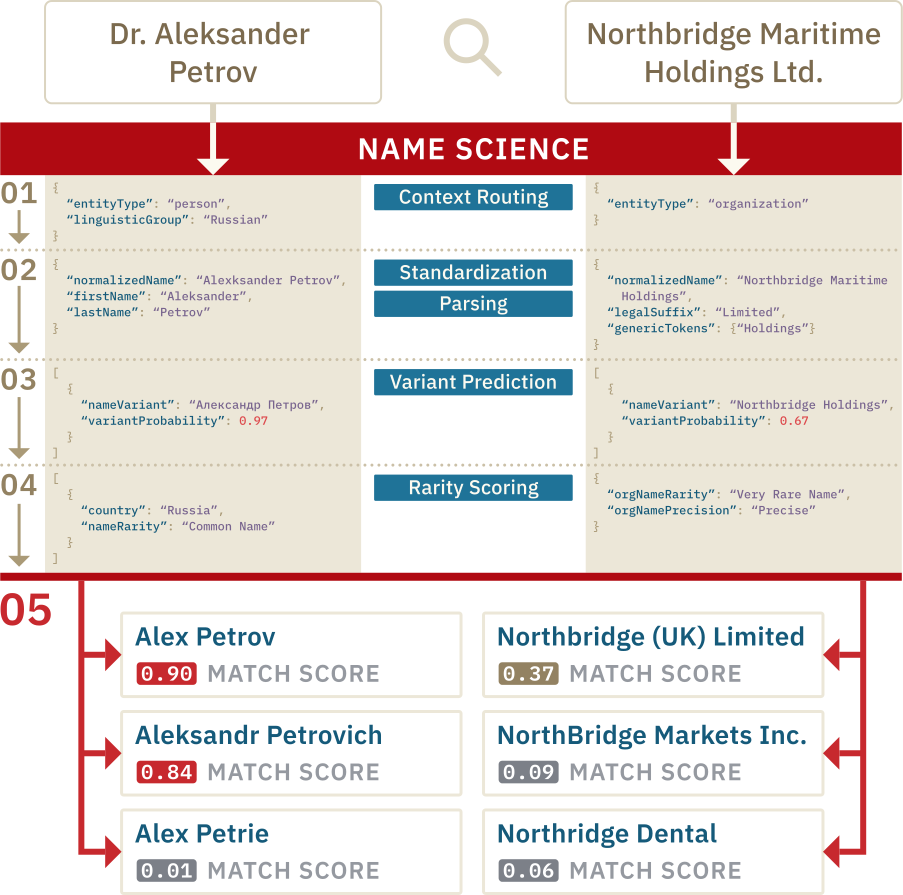
Standardize and parse
Normalize affixes and honorifics; parse person names and distinguish informative organization-name tokens from generic terms.
Predict and weight variations
Predict and weight nicknames, abbreviations, spelling and token variations, translations, and transliterations.
Add rarity and distinctiveness
Estimate name frequency by geography and how strongly individual components distinguish the name.
Calculate the Name Match Score
Compare similarly enriched names using this context, along with string and sound similarity, to estimate name-match probability.
In the platform
Find the names that matter. Reduce the noise.
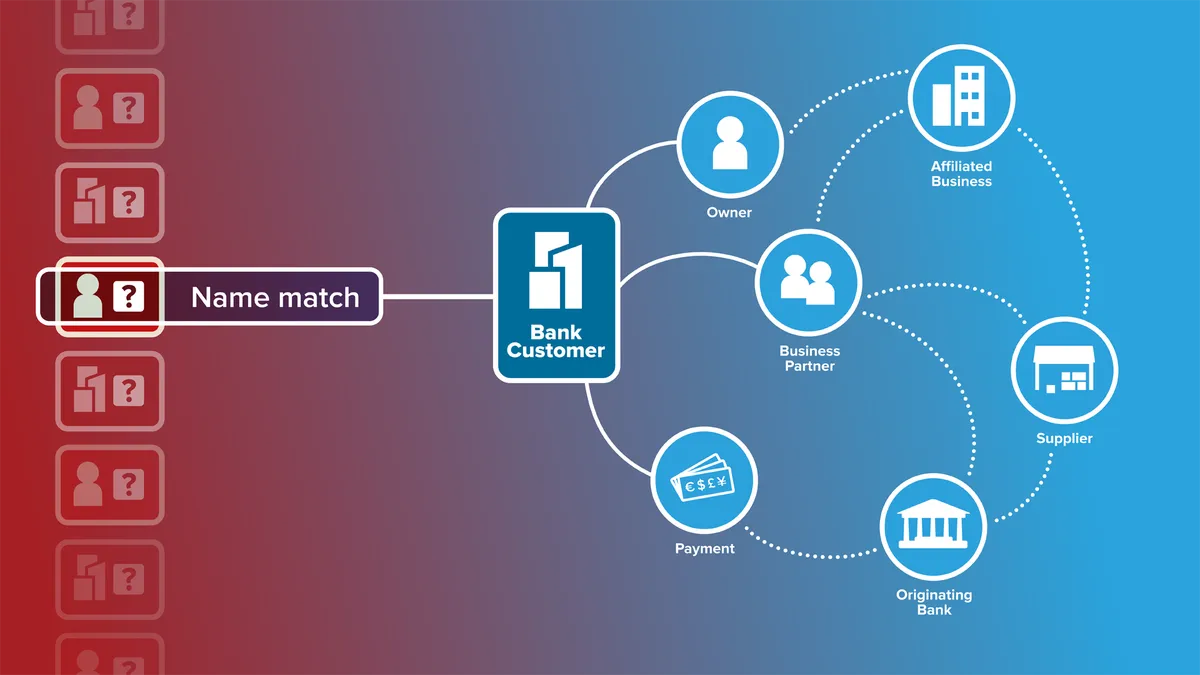
Name Science helps Graphyte recognize likely name matches across sanctions lists, adverse media, and company records, even across languages, scripts, and naming conventions. By finding expected variations and filtering out coincidental resemblance, it helps AML compliance and risk analysts focus screening, monitoring, and investigations on results that matter.
Frequently asked questions
Name science, answered.
What is name science?
Name Science is Quantifind’s proprietary approach to understanding and comparing names. It combines purpose-built AI models that capture how person and organization names are structured, vary across languages and cultures, and differ in frequency and distinctiveness. These signals help estimate the probability of a name match—surfacing likely matches and reducing false positives driven by string similarity alone.
How is name science different from fuzzy matching?
Fuzzy matching helps catch unexpected name variations by measuring similarities in spelling and sound. Name Science also anticipates expected variations such as nicknames, abbreviations, and transliterations using cultural and linguistic context. It combines those probabilities with traditional string distance metrics, name structure, and rarity to assess how likely two names are to match, rather than simply how similar they look or sound.
Why do false positives happen in name screening?
False positives arise when screening tools give too much weight to shared characters, sounds, or common name components. Similarity alone can suggest a match between unrelated people or organizations. Name Science considers cultural conventions, expected variations, and name commonality to distinguish likely name matches from coincidental resemblance and reduce unnecessary alerts.
What is entity resolution?
Entity Resolution is a field of data science, especially important in compliance use cases, which is focused on determining whether different data records refer to the same real-world person or organization. It typically compares names alongside attributes such as addresses, dates of birth, or registration numbers to link related records and distinguish separate entities. Quantifind’s Name Science strengthens this process by assessing name-match probability using cultural, linguistic, and statistical context. Even when only a name is available, it provides a richer basis for resolution while accounting for the ambiguity of common or shared names.
How does cultural context change a name match?
A variation that is expected in one naming tradition may be unlikely in another. Cultural context helps determine how names are parsed, which nicknames or spelling variants are plausible, and when tokens may be added, dropped, or reordered. Name Science uses these patterns to weight potential matches, recognizing meaningful variations without overvaluing coincidental string similarity.