Entity Resolution · Graphyte Technology
Know exactly who you’re dealing with.
Resolve people and organizations across messy, multilingual, incomplete, and fragmented data. Quantifind combines AI-native entity resolution, Name Science™, metadata, and network intelligence to deliver high-precision, explainable matches at enterprise scale.

99%
improvement in AML alert accuracy at a Tier 1 global bank
95%+
reduction in false positives at a global crypto exchange
85%
increase in accurate Priority 1 matches at a Tier 1 bank


the problem
Real-world data doesn’t arrive clean.
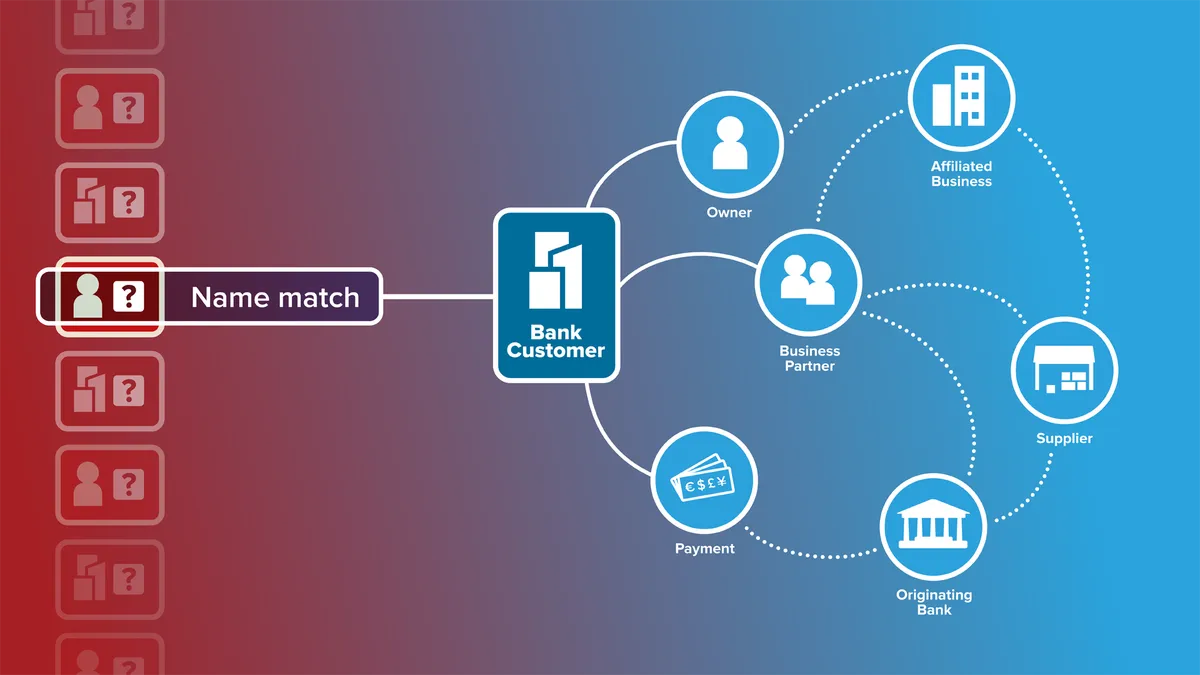
Names vary. Records are incomplete. Data gets truncated, mistyped, duplicated, or obscured. The same customer or counterparty can appear differently across onboarding, CRM, transaction monitoring, and screening systems.
When records can't be resolved accurately, organizations create false positives, miss risk, duplicate work, and lose a trusted view of who they're dealing with.
the fix
Resolve the entity, not just the record.
How it works
Go beyond string similarity.
Resolve messy identities
Handle name variations, transliterations, aliases, typos, missing data, and incomplete data.
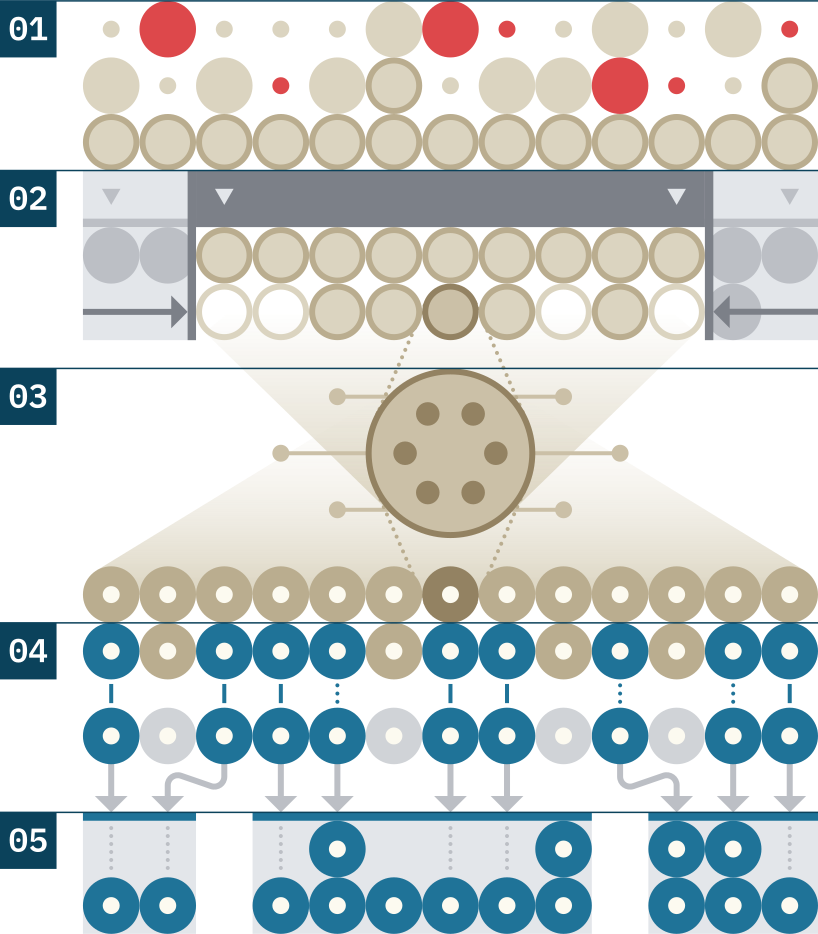
Add context to every match
Evaluate names with contextual data to distinguish meaningful matches from similarities.
Connect fragmented records
Link and deduplicate records across systems for a more complete entity view.
Classify match confidence
Classify matches as Strong, Fair, or Weak and explain the key signals.
In the platform
Name science is why the numbers hold.
Every screening call, monitoring pass, and investigation in Graphyte runs through this discipline — it’s how entity resolution sustains 95%+ accuracy on production volumes, and why decisions stay explainable to a regulator.
Efficiency gains observed as banks automate screening and investigations and reassign headcount — against compliance costs growing 20% a year.
Frequently asked questions
Entity resolution, answered.
What is entity resolution?
Entity resolution is the process of accurately identifying, matching, and unifying records that refer to the same real-world person or organization. It helps organizations build a more accurate understanding of who they're interacting with across fragmented systems and data.
Why is entity resolution important for financial crime compliance?
Accurate entity resolution helps financial institutions determine who they are actually dealing with across fragmented and inconsistent data. By connecting records that refer to the same person or organization, it can reduce false positives, uncover missed connections, and improve the accuracy of KYC, sanctions screening, and other financial crime workflows.
How does AI improve entity resolution?
AI enables entity resolution models to account for complex patterns that rules and string matching struggle to handle, including multilingual names, transliteration, truncation, incomplete data, contextual metadata, and relationships. Quantifind uses purpose-built models to generate high-precision, explainable match decisions at enterprise scale.
How does entity resolution reduce false positives?
Entity resolution evaluates additional context to distinguish records that merely look similar from records likely to represent the same person or organization. This helps suppress irrelevant matches that can overwhelm compliance teams while preserving meaningful ones. The whitepaper notes that fuzzy matching alone can produce false-positive rates exceeding 90% in high-volume compliance environments.
How does entity resolution support KYC and sanctions screening?
Accurate entity resolution helps institutions determine whether customers and counterparties correspond to people or organizations associated with sanctions, adverse media, or other risk. Better resolution can reduce unnecessary alerts while helping teams identify meaningful matches that simple name matching may miss.
How does Quantifind handle multilingual names and transliteration?
Quantifind uses models designed to recognize culturally and linguistically diverse name variations. Neural Entity Name Latinization models convert foreign-script names to Latin script based on context, while Name Science™ evaluates phonetic, semantic, linguistic, and frequency-based signals to identify likely matches.
Does Quantifind assign a risk score?
Quantifind's entity resolution models evaluate match confidence, not an overall risk score. Probabilistic classifiers determine whether records are a Strong, Fair, or Weak match, with the key signals behind the match decision made available to users.
Can Quantifind integrate entity resolution into existing systems?
Yes. Quantifind provides APIs for real-time and batch processing that can integrate entity resolution into existing data pipelines, onboarding systems, and risk workflows. Organizations can start with an individual use case and expand over time.