Intelligence and Investigations
Every investigation is a network problem.
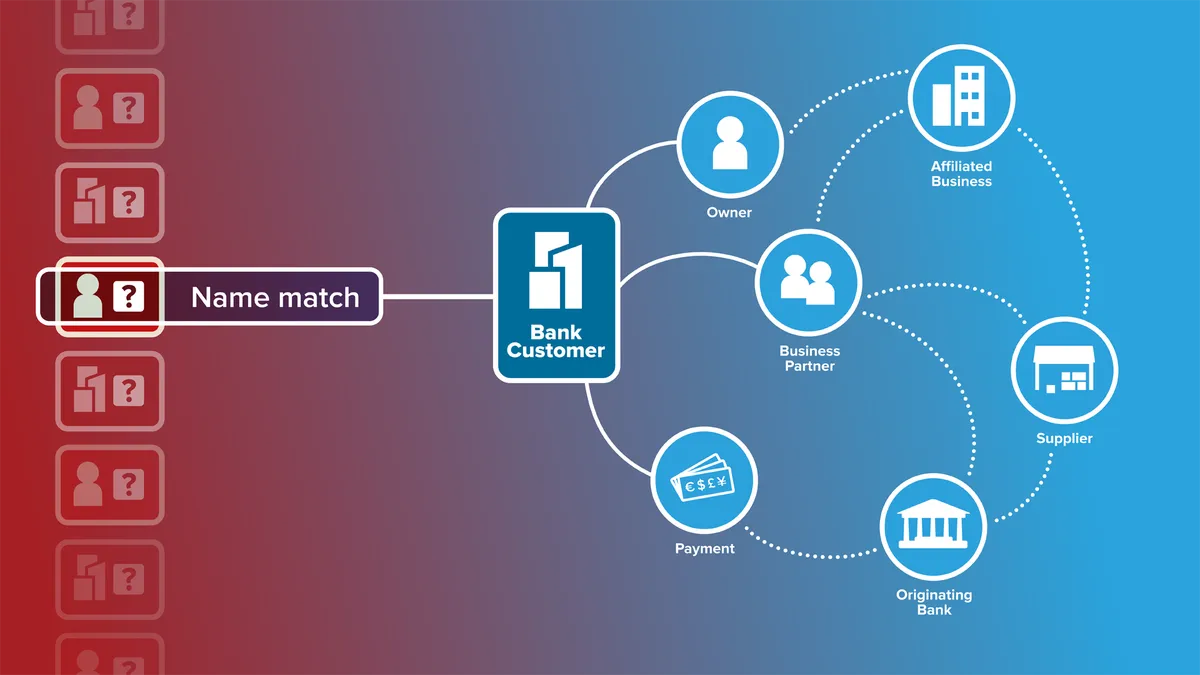
An investigation rarely stays contained to the name at the top of the file. A financial crime case leads to a shell company's real owner, a corruption probe leads to a politician's undisclosed business partner, a counterintelligence lead reveals a stake in a foreign venture. The relationships that actually matter, whether for building a case, developing a source, or flagging a FOCI risk, usually sit several degrees away from anything a name search alone would surface.
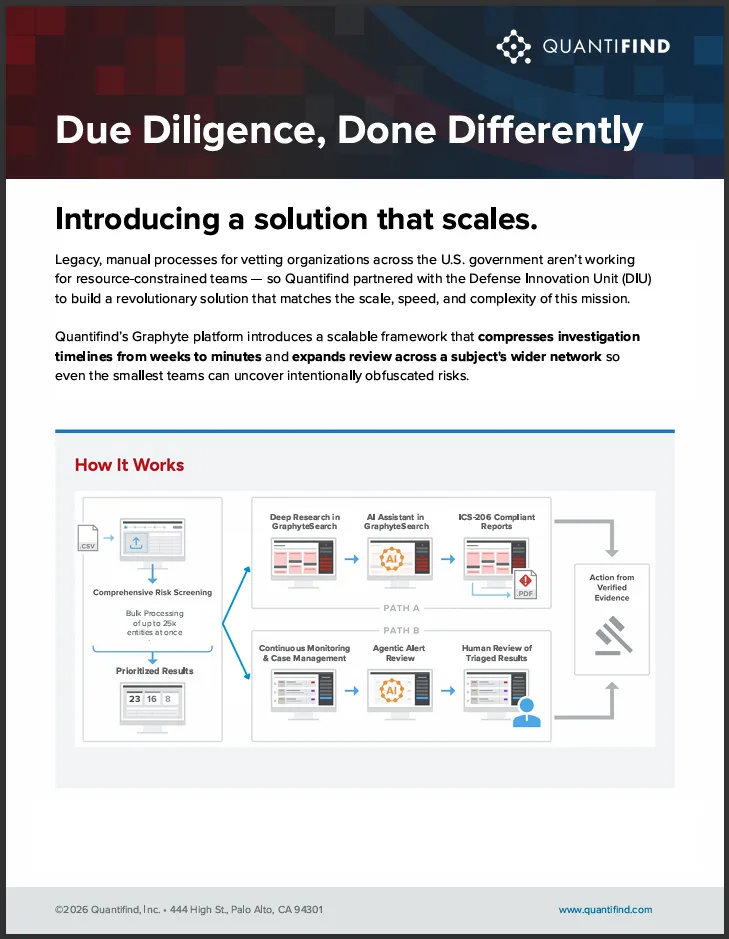
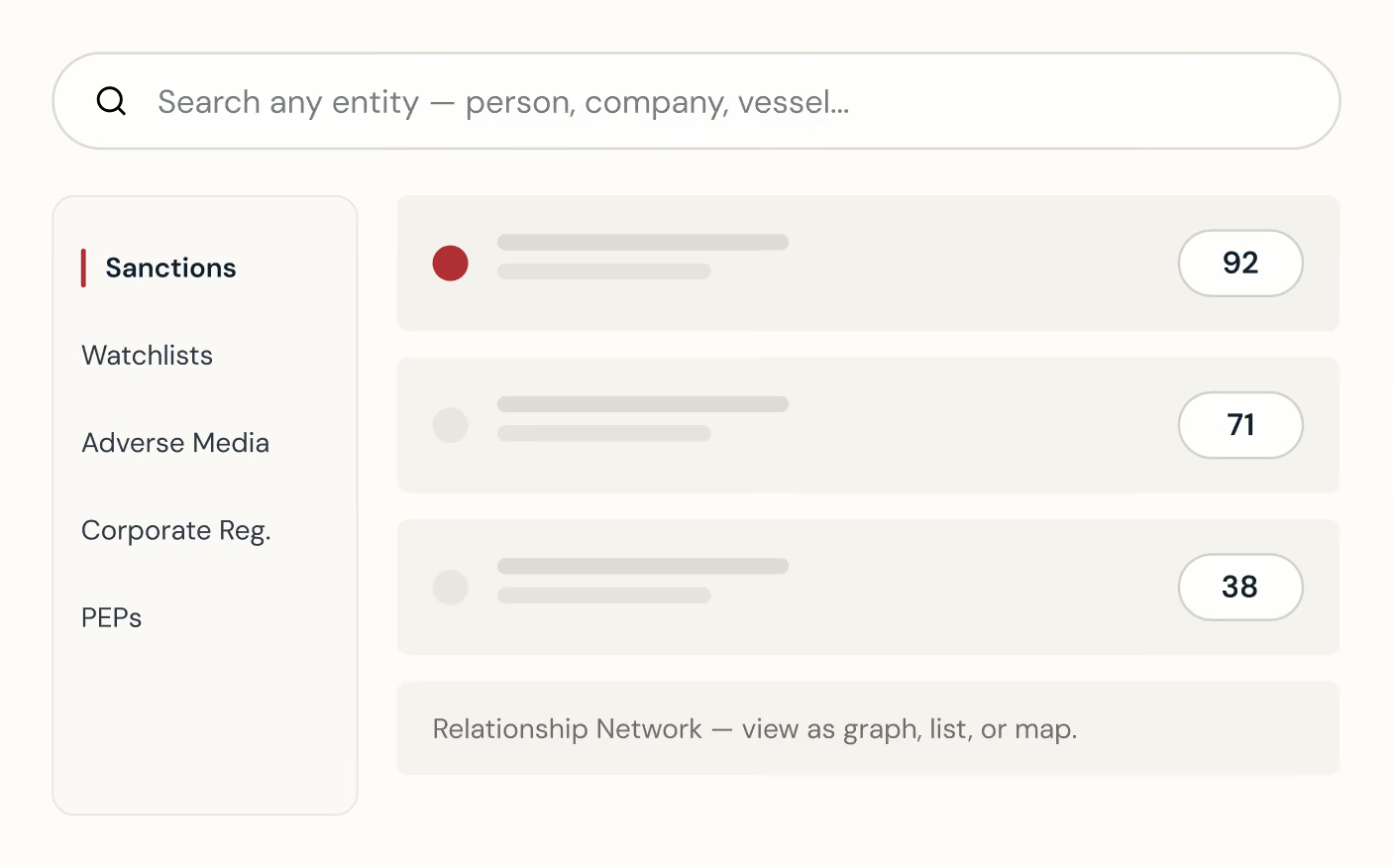
Quantifind maps that network automatically, tracing financial ties, business relationships, and associations through multiple degrees of separation. What used to take days of manual link analysis now surfaces in minutes, with the evidence behind it, so analysts spend their time on judgment calls, not data assembly.


200+
global public & commercial data sources
>$16M
federal R&D investment received between 2020 - 2026
95%+
reduction in false positives
100%
auditable, explainable decisions


the problem
Scale multiplies everything — including risk.
Adversaries have never had more ways to hide, and the information needed to find them has never been more abundant or more scattered. Relevant signals sit siloed across disconnected systems, buried in unstructured data, waiting to be connected. Teams are asked to screen higher volumes, faster, with fewer people, and the tolerance for error keeps shrinking as the stakes rise.
the fix
Automated network mapping with Quantifind enables small teams to trace hidden ownership and influence in minutes, not days.
The Capability Stack
Six capabilities. One diligence workflow.
Each capability is built in — not a separate product to buy.
Entity Screening
Vendor and subcontractor screening with Name Science™ entity resolution at 95%+ accuracy, run across a full population in batch or in real time for a single award.
Beneficial Ownership & FOCI Risk
Automated network expansion maps ownership, investment, and subcontractor relationships through multiple degrees of separation, surfacing foreign ownership, control, or influence hidden behind shell companies and layers of subcontracting.
Adverse Media & Sanctions Screening
Risk extracted from a deep archive of global news and sanctions lists using dynamic risk typologies, not keyword hits, distinguishing a vendor's principal from an unrelated namesake or a passing mention.
Corporate & Trade Risk
Corporate registries across 130+ jurisdictions and global trade data expose ownership structures and trade-based risk behind a supplier.
Population-Scale Batch Screening
Screen an entire vendor registry, award file, or grantee list at once instead of one record at a time, giving small teams full population coverage during onboarding, recompete, and periodic re-review.
Audit-Ready Case Documentation
Every risk determination carries source evidence, confidence scoring, and a full chain of custody, ready for the acquisition record or an oversight review.
How it works
Go from a name to intelligence you can act on.
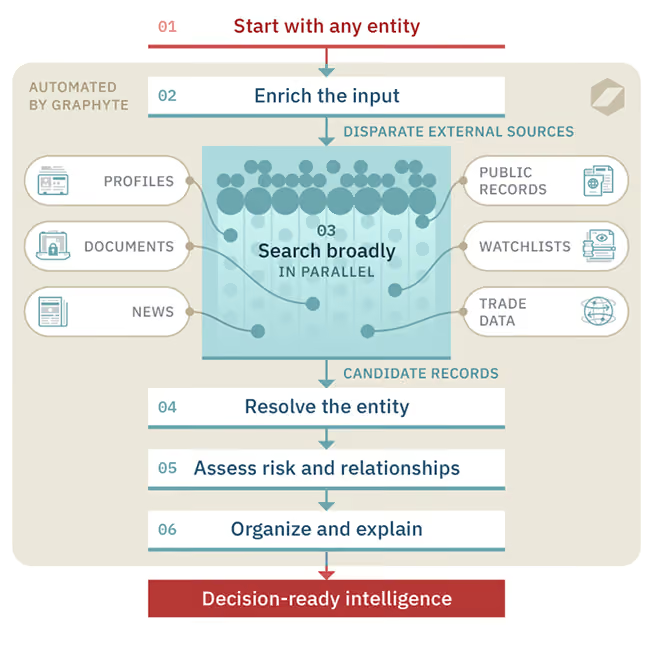
Start with any entity
Initiate your search with as little as an individual name, organization, address, handle, email, or phone number. Search a single name, a vendor list, award file, or a public-database.
Contextualize and search
Graphyte standardizes the name and location, flags potential data quality issues, and adds linguistic context, expected name variations, and geographic precision, then scans 200+ global structured and unstructured data sources.
Resolve and infer
Name Science™ and proprietary agentic middleware distinguish true matches among messy, multilingual data, then assembles a unified, confidence-scored profile by risk typologies, relationships, and relevance.
Assess and decide
Graphyte aggregates and summarizes the results, organizing findings by risk and confidence with supporting context, source evidence, and provenance. All that's left is deciding what risk you accept, what warrants a closer look, and what happens next.
Continuous Monitoring
Continuous monitoring re-screens a fixed population against new data as it is ingested, replacing one-time checks or periodic re-screening. New risk signals, from a sanctions listing to a change in ownership, surface as they emerge, so you’re never the last to know.
Frequently asked questions
OSINT software, answered.
What is network analysis software for government investigations?
Network analysis software maps the relationships, ownership structures, and associations surrounding a person or organization, surfacing connections that a name search alone would miss. Quantifind's Graphyte platform builds this network automatically from open-source and commercial data, resolving entities and scoring risk so investigators can trace a case beyond the name at the top of the file.
How does Graphyte identify hidden relationships between people and organizations?
Graphyte's Name Science™ and agentic middleware resolve entities across languages, aliases, and spellings, then extract relationships from both structured records and unstructured sources like news and corporate filings. The result is a network mapped through multiple degrees of separation, with each connection scored for relevance rather than returned as an undifferentiated list of hits.
How is Graphyte different from traditional link analysis tools?
Traditional link analysis surfaces connections; it does not determine which ones matter. Graphyte adds entity resolution and risk scoring on top of network discovery, distinguishing a true match from a coincidental namesake and filtering for relevance so investigators see the handful of connections that warrant review instead of every tangential hit.
What kinds of investigations can Graphyte support?
Graphyte supports a broad range of investigative work, from financial crime and corruption cases to counterintelligence leads and foreign-influence assessments. In each case, the platform maps the relationships, ownership structures, and associations surrounding a person or organization, including the financial ties and connections relevant to developing a source, so investigators can trace a case beyond the name at the top of the file.
Is Graphyte an OSINT tool, or does it also process classified data?
Graphyte is an OSINT platform, built entirely on open-source and commercially available information such as corporate registries, sanctions lists, and global news. It does not process classified data. Its memoryless architecture means queries are not retained or used to train external models, keeping unclassified investigative work fast and auditable.