Sanctions compliance has never been easy, but in 2025, it’s more complex than ever. Rising geopolitical tensions and rapidly evolving regulatory lists are putting financial institutions under intense pressure to identify risk faster and more accurately — and at greater scale. Legacy methods — static rules, manual updates, and overwhelmed analysts — simply can’t keep up.
That’s why AI has moved from a future ambition to a present-day necessity. It’s essential for keeping pace with today’s compliance demands. The U.S. government agrees. As former Treasury Secretary Janet Yellen recently shared, “The Treasury Department is in regular communication with financial regulators on their AI-related efforts, including harnessing the technology to mitigate illicit finance risks, including money laundering, terrorist financing and sanctions evasions.” (Reuters)
At Quantifind, we’re helping institutions modernize their sanctions programs with AI-powered solutions that reduce false positives, expose hidden risks, and adapt in real time to regulatory change — all while integrating seamlessly with your existing workflows.
The Problem with Traditional Sanctions Screening
For years, financial institutions have relied on rules-based systems to screen customer and transaction data against sanctions lists. That approach no longer works. Today’s lists are longer, more dynamic, and often politically charged. Sophisticated bad actors exploit weaknesses by hiding behind intermediaries, shell companies, and complex ownership structures.
Meanwhile, traditional tools still rely on basic string matching — flagging anything that resembles a name on a list. The result? A flood of false positives, overwhelmed analysts, and slow decisions.
All this while regulators continue to tighten expectations. Just this year, the U.S. expanded sanctions on Chinese companies linked to defense tech, and the EU introduced new controls around financial flows to conflict zones. Compliance teams must keep up, often overnight.
Why AI Is Now Essential for Compliance
Here’s the good news: AI is built for this kind of challenge. And when it’s done right, it changes everything.
Fewer False Positives, More Real Risk
AI doesn’t just match names. It understands names in context — across languages, character sets, and scripts. The most advanced models apply transliteration and real-time entity resolution to distinguish real risk from noise, so your team spends less time on false positives and more time on high-risk cases.
Real-Time Response to Real-World Changes
Sanctions lists don’t wait for scheduled updates — neither should your system. With AI-powered screening, updates are integrated in real-time, so you stay up to date with regulatory changes as they happen.
Scales As You Grow
Whether you’re screening thousands of transactions or millions, AI scales effortlessly, without added headcount or infrastructure. It’s built for the volume and complexity of today’s global payments landscape.
What to Prioritize 2025
As the year progresses, compliance leaders should focus on these priorities:
- Make AI Your Foundation
As Forbes notes, “AI algorithms can quickly analyze vast amounts of data to perform KYC and AML checks, reducing the time required for manual reviews while ensuring accuracy and compliance.” Now is the time to move beyond basic name-matching and adopt solutions that learn, adapt, and provide clear explanations for flagged matches.
- Clean Up Your Data
AI’s effectiveness is directly tied to the quality of data it processes. Ensuring accurate, comprehensive, and consistent customer and transaction records is crucial. As Harvard Business Review puts it: “Good data science + bad data = bad business results.”
- Stay Proactive on Regulatory Change
With global sanctions regimes evolving rapidly, it’s not enough to react; you need to adapt. The right AI system will detect emerging risks, adapt to policy changes, and help you mitigate exposure before regulators come calling.
How Quantifind Is Leading AI-Powered Sanctions Screening
At Quantifind, we’ve purpose-built our platform to meet the demands of modern sanctions compliance. Using advanced Name Science™, AI-native entity resolution, and global name rarity models, we dramatically reduce false positives while increasing detection accuracy.
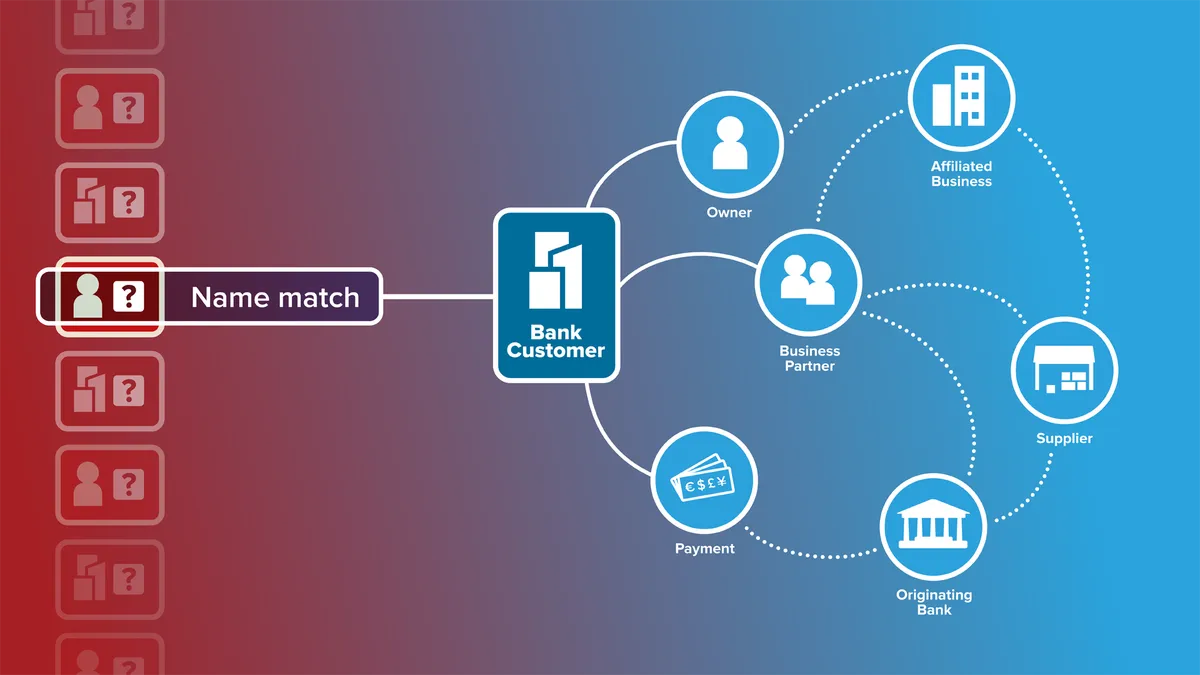
Our unified platform supports both customer and transaction screening, transliteration for non-Latin scripts (including Chinese), and network analysis to uncover indirect exposure through intermediaries, shell companies, and high-risk entities.
During the Russia–Ukraine crisis, we quickly enhanced our AI models to reflect new linguistic patterns and risk connections, helping clients adapt fast and cut false positives by 90+ %.
The Bottom Line
Sanctions screening in 2025 isn’t about checking a box — it’s about staying compliant, staying fast, and staying ahead of threats. And that means AI is no longer optional.
At Quantifind, our solutions are built to help you reduce risk, streamline workflows, and give your compliance team the tools they need to succeed.
Want to see Quantifind in action. Request a demo today.