On September 29, 2025, the U.S. Department of Commerce’s Bureau of Industry and Security (BIS) took a major step toward closing one of the biggest gaps in export control enforcement: the use of affiliates and shell companies to hide sanctioned ownership.
Through a new Interim Final Rule, BIS has aligned its Entity List and Military End User (MEU) List with the U.S. Treasury’s OFAC 50 Percent Rule, meaning any entity that is 50% or more owned, directly or indirectly, by a listed party is now also restricted.
This shift from a name-based to an ownership-based enforcement model significantly broadens the scope of risk for exporters, financial institutions, and multinational corporations.
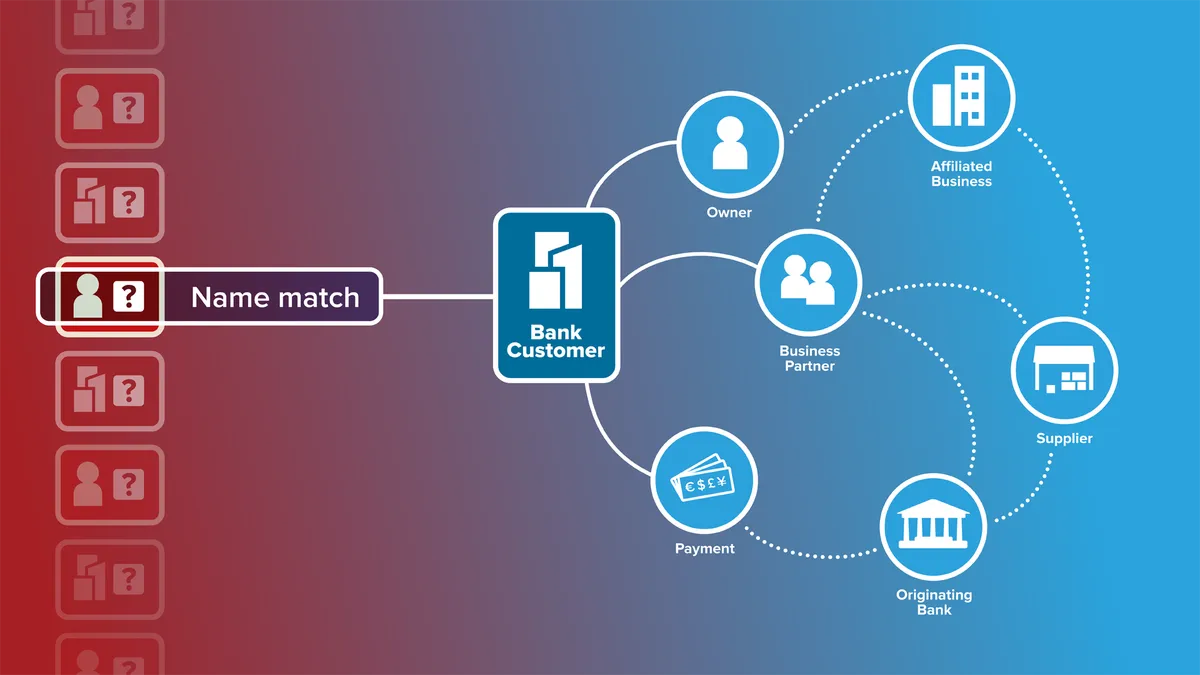
Traditional screening tools struggle to uncover these hidden ownership links, especially when sanctioned entities obscure their control through complex or layered structures. This is where AI makes a difference. By combining entity resolution, beneficial ownership mapping, and continuous monitoring, Quantifind reveals relationships that would otherwise remain invisible, helping compliance teams detect risk before it becomes exposure.
Why It Matters
According to the BIS, the new rule could affect thousands of subsidiaries across nearly 100 countries, many of which have no obvious connection to sanctioned entities on paper.
In practice, compliance teams must now:
- Detect indirect and aggregate ownership structures.
- Identify co-owned entities that collectively cross the 50% threshold.
- Monitor ongoing ownership changes and red flags across global networks.
Doing this manually, especially across fragmented or opaque jurisdictions, is nearly impossible.
How Quantifind Helps
Quantifind helps organizations operationalize the BIS 50% Rule by revealing ownership and affiliation risks that structured data alone cannot show.
- Entity Resolution and Disambiguation
Our AI-native Name Science™ and Entity Resolution technology links entities across inconsistent datasets to uncover when a subsidiary, affiliate, or shell company is connected to a listed party.
- Beneficial Ownership Mapping
Quantifind automatically maps ownership trees to reveal both direct and indirect control relationships. The platform automatically aggregates ownership percentages across multiple parties to flag when the 50% threshold is reached and identifies co-ownership scenarios that may trigger sanctions exposure under OFAC and BIS rules. Structured data linkages from trusted sources power these insights.
- Global Adverse Media and Public Records Mining
Machine learning and NLP extract hidden affiliations from unstructured data such as media coverage, regulatory filings, or leaked documents to expose relationships that official registries miss.
- Risk Scoring and Automated Alerts
Quantifind assigns explainable risk scores based on ownership, affiliations, and proximity to sanctioned parties, and automatically triggers alerts when ownership changes approach OFAC or BIS thresholds.
- Continuous Monitoring
Our platform continuously monitors entities and updates risk profiles in real time, ensuring you not only find hidden risks but stay ahead of them.
Use Cases
- Screening third parties, suppliers, or counterparties for indirect sanctions exposure.
- Enhancing KYC, onboarding, or vendor due diligence.
- Monitoring ownership changes in high-risk regions or sectors.
- Supporting regulatory audits with traceable ownership analytics.
The Quantifind Advantage
While others describe the BIS 50% Rule as a compliance challenge, Quantifind treats it as a data challenge and solves it with explainable AI.
Our platform combines structured ownership data with unstructured intelligence from public sources, delivering the most complete view of beneficial ownership and affiliated risk available.
The result is faster detection, fewer blind spots, and transparent AI that regulators and investigators can trust.
Stay Ahead of the 50% Rule
As enforcement expands, organizations that can identify hidden affiliations first will gain the upper hand. Quantifind helps you protect trade operations, preserve reputation, and ensure compliance with confidence.
Contact Quantifind to see how our AI-powered entity resolution reveals what others cannot.